Now Reading: Huawei highlights AI-driven cybersecurity in Johannesburg
-
01
Huawei highlights AI-driven cybersecurity in Johannesburg

Huawei highlights AI-driven cybersecurity in Johannesburg
by AKANI CHAUKE
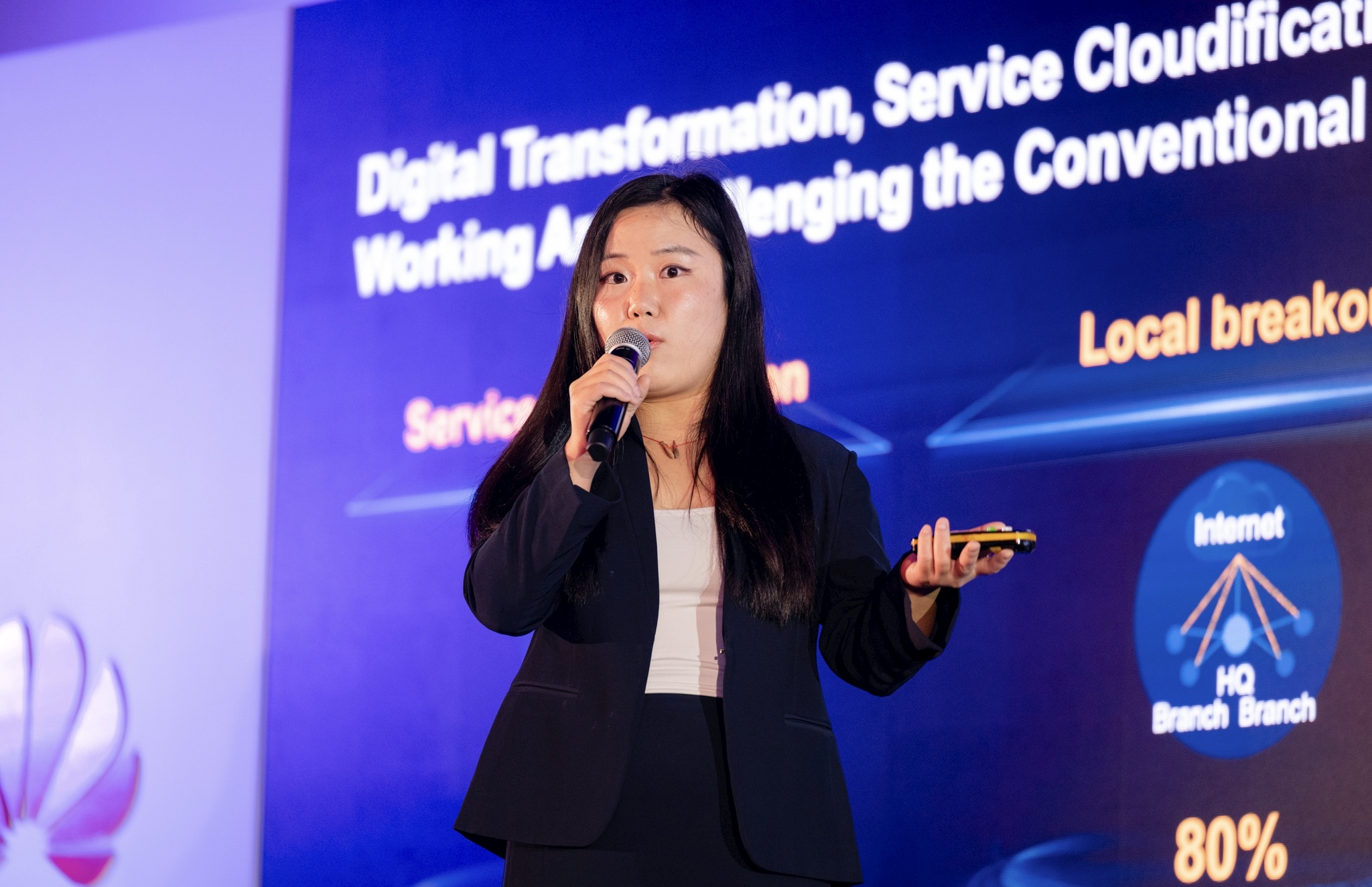
JOHANNESBURG – HUAWEI South Africa showcased its Xinghe portfolio of AI-driven networking solutions at its IP Club 2026 event, signalling a decisive shift from theory to real-world deployment.
More than 450 customers, partners and industry stakeholders attended the event, where Huawei demonstrated how AI is being applied to secure and optimise enterprise networks.
The move comes as organisations face mounting pressure from increasingly sophisticated, AI-powered cyber threats that traditional security models can no longer adequately address.
Held at Focus Rooms in Johannesburg on 25 March, the event highlighted Huawei’s AI Campus approach, which integrates existing network infrastructure with intelligent tools such as iMaster NCE and NetMaster.
These systems enable real-time monitoring, automated threat detection and improved network performance.
Opening the event, Kui Zheng, CEO of Huawei Enterprise South Africa, emphasised the dual impact of AI.
“AI is making business faster, smarter and more efficient,” he said. “However, it also introduces new risks that demand more advanced, secure and future-ready network solutions.”
Ransomware remains one of the most significant threats, largely driven by financial gain.
Yanjun Yu, Senior Principal Architect at the AnShi Lab, Edison Research Center in Canada, described cybercrime as a mature, service-based economy.
“Organised cybercriminals now operate like businesses, offering services such as malware-as-a-service and ransomware-as-a-service,” he noted, adding that recent attacks in South Africa have caused severe disruption and data breaches.
To address these challenges, Huawei positions its Xinghe portfolio as a comprehensive, AI-driven framework for building intelligent and resilient networks.
As organisations adopt hybrid work models and operate across multiple cloud environments, traditional, perimeter-based security architectures are becoming obsolete.
Huawei’s AI Fusion SASE solution applies an “AI versus AI” approach, using intelligent systems to detect and counter AI-driven threats in real time.
The solution connects and protects distributed environments without compromising performance or relying heavily on manual intervention.
Han Wu, Product Manager at Huawei Southern Africa ICT Marketing & Solution Sales, noted that increasing complexity—driven by multi-cloud adoption and remote workforces—has rendered traditional security models ineffective.
Huawei’s approach, she explained, delivers intelligent, all-scenario protection across users, devices and data.
Deployed across sectors including government, transport, finance and education, the solution is designed to reduce risk, simplify operations and ensure consistent security across environments.
Huawei’s strategy spans the full enterprise network stack:
- AI Campus builds secure, intelligent campus networks that enhance user experience and integration.
- Intelligent WAN provides a scalable, automated and secure foundation for connecting distributed environments.
- AI Fabric supports high-performance, always-on data centre networks with advanced automation.
- Unified SASE delivers end-to-end, AI-powered security through adaptive and integrated protection.
The event also underscored the importance of collaboration within South Africa’s ICT ecosystem. Huawei is working with Business Connexion (BCX) as its primary implementation partner to deliver these solutions to local enterprises and the public sector.
BCX underpins much of the country’s digital infrastructure, supporting critical services ranging from telecommunications for national elections to pharmaceutical distribution systems and financial transactions at service stations and ATMs.
Reliable, secure and always-on networks are therefore essential.
Lucky Sibanyoni, Sales Business Development Executive at BCX, said: “Our focus is on solving customer challenges by delivering solutions that improve performance, reliability and overall user experience.”
Through its partnership with Huawei, BCX is modernising legacy systems with AI-enabled infrastructure, reducing downtime, improving visibility and delivering more stable services.
Initiatives such as IP Club further support South Africa’s digital transformation across key sectors, including education, healthcare and enterprise.
The programme promotes skills development, innovation and collaboration, while enabling ICT professionals to connect and share expertise through workshops and global engagement.
Huawei is also expanding the IP Club community through a structured recruitment programme aimed at strengthening capabilities across the local ICT landscape.
The trajectory is clear: greater adoption of AI-driven networking and more secure, adaptive systems to meet the demands of an evolving digital environment.
– CAJ News